On the second part of my Ethiopian odyssey, we met pastoralists living traditional lives as people must have done all over Africa at the start of the 18th century. These tribes, in the most remote part of the Omo Valley, had their first contact with white people in the 1950s, which is within living memory for the oldest community members.
People are often nostalgic for times gone by. If you feel stressed out by the fast pace of modern life, you may think of how simple life must have been 200 years ago, when a collectivist ethos prevailed in the place of the individualist mindset of many societies today. What I discovered was that life 200 years ago was not as romantic as it seems at first.
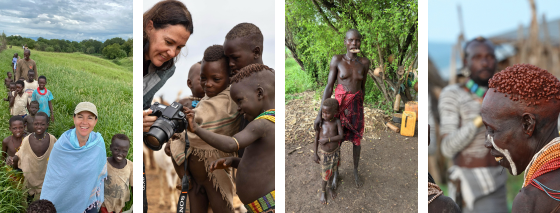
To get to Lale’s Camp, our base along the Omo River, involved a one-hour flight from Addis to Jinka. From there, we drove for four and a half hours, arriving at camp just before nightfall. To visit the most remote Mursi tribe, we had a four-hour boat trip on the Omo River. While this remoteness (and no internet access) has insulated people from Western influence, it also has its downsides. Access to medical care and everyday medicine like paracetamol and ibuprofen is almost nonexistent. The chief of the Mursi tribe had fractured his arm falling from a tree and the closest clinic was a two-day walk away. He joined us on the boat ride back, where he could get treatment for his broken arm at the village clinic. Most people are illiterate and there are no schools in this remote part of the country.
While the women I met were vibrant, friendly and excellent mothers, they have few rights in a patriarchal society. For example, they do not have the right to take contraception without their husband’s permission. With no modern conveniences, like running water and electricity, much of the hard labour of growing food, cooking, cleaning and raising children falls to the women. The men I met were incredibly hard workers too, and many were very successful farmers with huge herds of goats and sheep. Their lives were no easier than the women’s lives.
I just loved meeting the children wherever we went. They outnumbered the adults and were the same as children all over the world – curious, sweet and quick to laugh. One little girl followed me shyly for some time and eventually I held out my hand to her. She placed her small hand in mine, and I squeezed her hand in a handshake. She found this terribly strange and ran off to tell her friend, demonstrating how I had shaken her hand and they both burst into fits of laughter. Another child felt the velcro on my raincoat, fascinated by how it worked.
The babies were the most beautiful, plump little things. They were adorned with beautiful beads and their hair was shaved into creative styles. One little guy, wearing a necklace with the number 8 as a pendant, was teething and rivers of drool ran down his chin. An elderly grandfather, whom this baby must have known, as his face lit up in a gorgeous smile of recognition, came and checked his teeth. The toddler had two lower teeth coming out. Later, I asked if there were any traditions about the first appearance of teeth in a baby. I found out that if a child’s top teeth appear first, the child is considered mingi, and is believed to bring catastrophic bad luck to the community. In the past, these children were killed. The practice was banned in 2012.
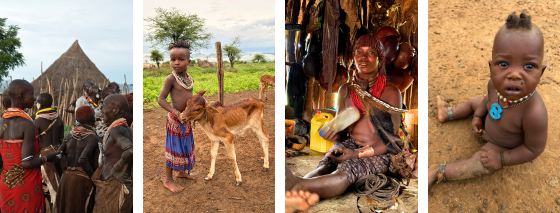
The experience of interacting with the tribes we encountered was always respectful and genuine. I highly recommend this kind of interaction over the shows put on for tourists in the areas closer to Jinka. These tourist traps have created a complicated “human zoo” dynamic in some parts of the Omo Valley. This was described by solo traveller Svetlana Baghawan on her blog, Maverickbird, as a “camera- and cash-based form of interaction that, according to many, is uncomfortably crass and voyeuristic.” I would avoid these at all costs.
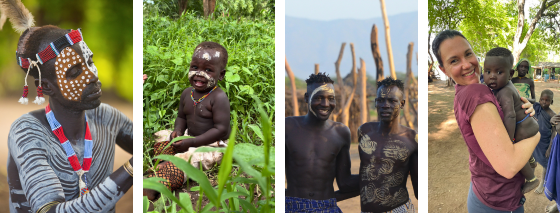
By design, our experience was vastly different, thanks to our responsible, local tour operator, Wild Expeditions. We encountered four tribes during our time in the Omo Valley. The Mursi are famous for their lip plates and body scarification. The Hamar women wear their hair in beautiful braids, coloured red from an ochre paste they rub into their hair. The men wear clay caps. Married women wear heavy, metal neck rings and the first wife is distinguished by a specific ring with a prominent circular knob. This tribe is also famous for bull jumping, a ritual for young men seeking marriage.
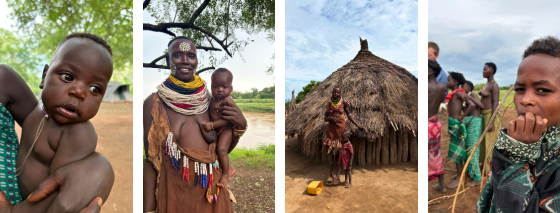
Lale’s camp is run by members of the nearby Karo tribe. The Karo are famous for their body painting. We observed them using white chalk mixed with water or animal fat to paint each other’s bodies in intricate patterns like dots and handprints. We had the opportunity to witness the Karo celebrating with traditional dancing in the village. We also visited a Kweegu village. The Kweegu are fishers and hunters, and excellent at navigating the crocodile-infested waters in their traditional canoes.
In addition to the fascinating cultural interactions we had on this part of the trip, I got to see my dream bird (‘a lifer’ in birding bucket-list terms): the Pel’s fishing owl. We saw six Pel’s along the river, one with a fish in its talons. I remember my parents searching the fig forest at uMhuze for one of these elusive birds when I was a young child. It’s been a lifelong desire fulfilled to see these magnificent orange owls. The carmine bee-eaters, which nest along the river banks, were present in great numbers and must be one of the most sublime birds I’ve ever seen.
You can read about the first part of my Ethiopian trip, where I got to see critically endangered Ethiopian wolves (including some cubs) in the Bale Mountains here.
To find out more about travelling to Ethiopia and visiting the tribes of the Omo Valley, reply to this email with your questions.
I look forward to hearing from you.
Happy travelling,
Diana
Sign up for more newsletters like this here: https://mailchi.mp/2e4afa50d15f/leopard

We are totally independent and not affiliated to any group of lodges, so you know that you’re getting the best itinerary and choice of accommodation on offer.

Crafting your ideal holiday can be a time consuming exercise, especially if you don’t know the region well, or you’re travelling in a group (like a multi-generation family holiday, or for a special celebration). We take your requirements and then distill and simplify all the travel info into a perfect itinerary for you. You’re welcome to be involved in the planning process as much, or as little, as you like.

Leopard is a small “human-sized” business offering personal touches. We want you to feel like you’re dealing with a real person who gives you the attention you deserve.

We specialise in curating itineraries that apply sustainable travel principles. One of our core company values is to support the conservation of biodiversity through travel. We recommend longer stays in each destination, supporting local small businesses and visiting off the beaten track attractions.
Our meticulous planning ensures our clients have a completely seamless experience, but in those instances where something goes wrong, we are available 24/7 to solve any problems.
We are true Africa experts. “My team and I visit almost every hotel and update our ‘little black books’ with hidden gems, so I can recommend the perfect stay for every client,” says Diana Granoux, Leopard’s founder and director.
We curate each journey for you. Every itinerary is handcrafted to ensure that it matches perfectly with your wishes. We tailor each itinerary so every detail feels perfect. From breathtaking beaches to adventurous safaris, spectacular views, hotels and knowledgeable guides.