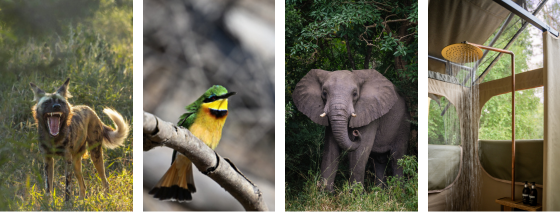
“Mozambique is one of the most underrated and exciting destinations. It’s a place where you can experience raw wilderness. For example, Gorongosa is three-and-a-half times the size of the Maasai Mara and yet it has only 32 commercial beds! That sort of exclusivity is rare, and there is some seriously good game viewing. It’s an especially good place to see wild dogs, which are the apex predators here,” shares Suzanne Bayly, Managing Director of Classic Portfolio.
For travellers who value more than just comfort and exclusivity, we share two regenerative travel experiences In Mozambique, curated by Classic Portfolio. Regenerative travel aims to actively improve the places we visit. It’s a philosophy of leaving a destination better than you found it: restoring ecosystems, uplifting local communities, and giving you, the travellers, a chance to leave a positive legacy.
Encountering pangolins in Gorongosa National Park
Gorongosa National Park in central Mozambique has undergone one of Africa’s most inspiring conservation recoveries. Mozambique’s civil war and the resultant poaching caused devastation to this area, but since 2004, a concentrated restoration project has resulted in a magnificent resurgence of wildlife populations.
Perhaps one of the most poignant symbols of that revival is the presence of pangolins, the shy, scaly mammals, which are also unfortunately among the most trafficked animals in the world. In recent years, conservation teams have rescued and rehabilitated over 150 pangolins and reintroduced them into secure wild habitats in Gorongosa.
If you visit the park for five nights or more, you have the opportunity to join the Pangolin Project on the morning foraging walk. A team of vets and rangers take pangolins, which are in the process of being rehabilitated, to different parts of the park every day. Pangolins are nocturnal and notoriously elusive, yet through the Pangolin Project, you can spend an hour walking alongside them. While you can’t touch the pangolins, you’ll witness something incredibly rare in the wild and enjoy exceptional photographic opportunities as they feed and explore.
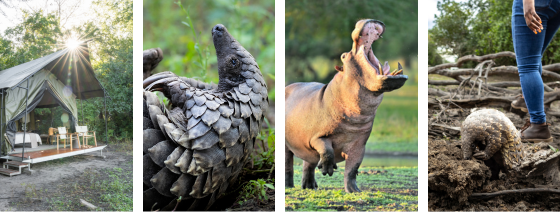
Guides deeply versed in pangolin behaviour, ecology, and conservation will share the story of their rescue work, their survival prospects, and the park’s broader restoration efforts. Through your visit, you support ranger patrols, habitat protection, and the ongoing rehabilitation work. In regenerative-travel terms: you’re not just a spectator, you’re a contributor.
Seeing dugongs off the Bazaruto Islands
If Gorongosa is a testament to the restoration of Africa’s terrestrial heartlands, then the turquoise seascape of the Bazaruto Archipelago, off Mozambique, tells a similar story for the ocean. The protected marine area is among the last viable strongholds for a rare and vulnerable marine mammal, the dugong, also known as the “sea cow.” Dugongs rely entirely on seagrass for food and the conservation of seagrass beds that run from the northern islands of the Bazuruto Archipelago to the south around Azura Benguerra is a critical part of ensuring their survival.
“I’ve been going to the Bazuruto Archipelago since the 1990s and for years it was as if the dugong was a mythical creature, like a unicorn. I hadn’t seen them. However, since 2016, I’ve seen dugongs each year when I return. And although I’ve never seen a juvenile, recently, the owner of Azuru Benguerra Island was on Peri Peri Beach and spotted a baby dugong in the water!” shares Suzanne.
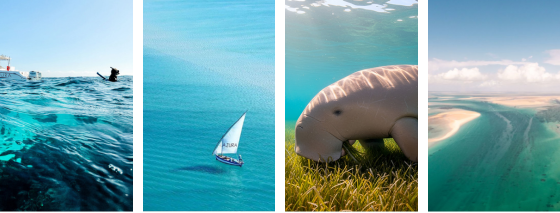
“Another exciting conservation project is the seahorse restoration project, which takes place in the same seagrass beds. Little flag markers are placed in areas where seahorses have been spotted and then at low tide, you can wade out in water that’s about thigh high and see the seahorses!”
Over recent decades, unsustainable fishing practices, habitat destruction and loss of seagrass meadows have decimated dugong populations along much of the East African coast. However, thanks to the management efforts of African Parks, which co-manages the marine reserve, and concerted conservation law enforcement efforts that include regular patrols, community engagement, and monitoring, the Bazaruto Archipelago remains a marine refuge.
In 2024, a pioneering satellite-tagging project was launched to monitor dugong movements, their feeding grounds and migration corridors, which is a critical step to ensuring their survival.
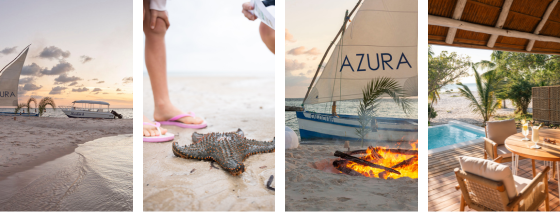
Guests staying at Azura Benguerra (and other luxury spots in Bazaruto) can look for the shy, elusive dugong from boats or kayaks. In the quiet seagrass meadows off Benguerra or Santa Carolina, you may catch one drifting peacefully through the clear water. Sightings are rare, but seeing a dugong in the wild is a true privilege. By choosing protected-area lodges and responsible operators, you support marine conservation, help local communities, and play a small part in safeguarding this unusual creature’s future.
Both Gorongosa’s pangolin rescue-and-release programme and Bazaruto’s dugong-protection efforts are active, ongoing initiatives which embody regenerative travel. When you choose these lodges, your stay directly supports real restoration and luxury travel becomes stewardship rather than consumerism.
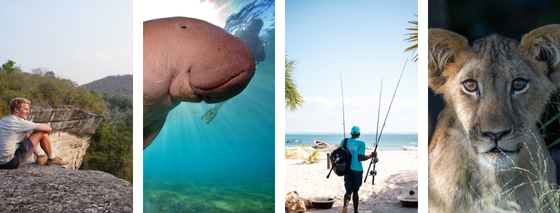
What better way to unwind, and rejuvenate yourself than by enjoying regenerative travel that allows you to move beyond admiring Africa’s beauty to actively protecting it? And if Mozambique is calling, a bush-and-beach journey might be the most meaningful way to answer. If so, we’d love to help you plan a trip like this, ensuring seamless logistics and a holiday tailor-made to suit your needs. Reply to this email, and we’ll happily answer any questions you have.
Because true luxury in 2026 won’t just be about how soft the sheets are, or how blue the sea is. It will be about what you leave behind.
Happy travelling,
The Leopard Team
P.S. Read ‘Discovering Mozambique: A Family Adventure in Paradise’ on our blog or watch ‘Zanzibar vs Bazaruto, which is best?’ on our YouTube channel.
P.P.S Watch the Pangolin Project in action.
Sign up for more newsletters like this here.

We are totally independent and not affiliated to any group of lodges, so you know that you’re getting the best itinerary and choice of accommodation on offer.
Crafting your ideal holiday can be a time consuming exercise, especially if you don’t know the region well, or you’re travelling in a group (like a multi-generation family holiday, or for a special celebration). We take your requirements and then distill and simplify all the travel info into a perfect itinerary for you. You’re welcome to be involved in the planning process as much, or as little, as you like.
Leopard is a small “human-sized” business offering personal touches. We want you to feel like you’re dealing with a real person who gives you the attention you deserve.
We specialise in curating itineraries that apply sustainable travel principles. One of our core company values is to support the conservation of biodiversity through travel. We recommend longer stays in each destination, supporting local small businesses and visiting off the beaten track attractions.
Our meticulous planning ensures our clients have a completely seamless experience, but in those instances where something goes wrong, we are available 24/7 to solve any problems.
We are true Africa experts. “My team and I visit almost every hotel and update our ‘little black books’ with hidden gems, so I can recommend the perfect stay for every client,” says Diana Granoux, Leopard’s founder and director.
We curate each journey for you. Every itinerary is handcrafted to ensure that it matches perfectly with your wishes. We tailor each itinerary so every detail feels perfect. From breathtaking beaches to adventurous safaris, spectacular views, hotels and knowledgeable guides.