How the white rhinoceros was saved from the brink of extinction. But their fight for survival is not over yet.

The famous hunter F.C. Selous said, in 1892, “Therefore the two white rhinoceros which I shot in 1882 are the last of their species that I have ever seen alive, or am ever likely to see…. I fully expected that these animals would become extinct.” Luckily for future generations, he was wrong. But rhino populations were severely depleted at the start of the twentieth century, having been slaughtered for their horn, hide and flesh. After being hunted to near extinction, rhino survival was further threatened by industrial agriculture which destroyed their natural habitat and finally, most insidiously, the promotion of so called traditional Chinese medicine by Mao Zedong

I recently read “The White Rhino Saga” by Dr Ian Player. It is a thrilling account of how the southern white rhino were saved, for the entire continent, in a little corner of South Africa. It was a team effort and Ian Player goes to great lengths to give credit to the many people who played their part, most notably the legendary Zulu game ranger and tracker, Magqubu Ntombela.

Ian Player arrived at an empty Umfolozi Game Reserve in 1952. In the preceding decade, the government had senselessly ordered that all wildlife in the buffer zones be shot in an effort to control the tsetse fly, which caused sleeping sickness. This did not work and the tsetse fly was only eliminated (along with many other beneficial insects) with the aerial spraying of the pesticide, DDT. It was in this context that Ian Player decided that every effort must be made to prevent the extinction of the rhinoceros. 

By 1960, the population of white rhino had been sufficiently restored so that the team could start thinking about relocating small groups to start new populations in other reserves, thereby decreasing risk of extinction if one population was destroyed. They started repopulating nearby reserves in northern Kwa Zulu Natal, then known as Zululand, but soon set their sights further afield. The last white rhino in Kruger National Park had been shot in 1896, and it was time for these great beasts to return. Mandhlagazi, Mfohloza, Mpila and Madhlozi were the vanguard of more than 800 white rhino who were eventually translocated by 1970. Today, on a week long visit to Kruger National Park, you are almost guaranteed to see white rhino. For this privilege, we should thank Dr Ian Player and his team. 

Capturing these gentle giants was no easy task and tranquillisers were at an experimental stage. Around the same time, rhino were being captured and moved as part of Operation Noah at Kariba Dam in Zimbabwe. My father’s great friend, Frank Junor, was a young scientist in the Operation Noah team, and I remember being captivated by Frank’s stories of how they rescued animals from drowning. Frank was a great raconteur and told one particular story with relish, about how he was gored in his left leg by a furious, injured buffalo who was lying in wait for him to return to his boat. Luckily the story ended well and Frank was rescued and made a full recovery. This video, from Operation Noah, clearly shows how difficult and dangerous it was to capture rhino in the early days.

To assist with the capture of the first rhinos at Umfolozi, a scientist, Dr Harthoorn, was brought out from Uganda in 1960. There was a lot of guesswork at this stage because nobody knew which drugs would work on rhino, neither did they know the correct weight of the animals. And so, it was with a lot of trial and error, and heartache at lost animals, that the team slowly became proficient at capturing rhino. Animals were lost along the way to overdoses, constipation, septic wounds, and from getting their horns stuck during transportation. In one particularly sad failed capture, a rhino reacted badly to the drugs and ran off a cliff. The team tried desperately to save him, but did not succeed. 

Today, the future is uncertain. The western black rhino was declared extinct in 2011 and there are only two female northern white rhinos left. They are kept under 24 hour guard. The greatest threat to the continued survival of rhino is the persistent poaching of the animals for their horn which is believed to have medicinal properties. This has been proven by science to be a complete fabrication but the belief still persists is fuelled by misinformation and human greed. 

Conservation and anti-poaching efforts are mostly funded by tourism with small contributions from governments. Since the temporary stoppage of tourism due to the global health pandemic, funds for conservation, especially for the salaries of the rangers who protect wildlife against poaching have dried up. If you would like to make a difference to conservation, and help fund ranger salaries, please consider donating to Ride4Rangers by clicking here


Happy travelling!
Diana


P.S. A number of private game reserves in South Africa offer once in a lifetime rhino conservation experiences where you are part of the team that does either a notching or dehorning. I highly recommend this one at Phinda in northern Kwa Zulu Natal, close to where Dr Ian Player was based. 

P.P.S A rhino conservation experience is not the same as activities such as lion cub petting and feeding elephants, which are not recommended. For further information, please read this short piece I wrote on animal interactions in South Africa.

Sign up for more newsletters like this here: https://mailchi.mp/2e4afa50d15f/leopard
    Personalised luxury travel to Africa. We help you design your perfect holiday using local expertise.
    Follow us on social media
    Subscribe to our monthly newsletter
    Copyright © 2026 · All Rights Reserved · Leopard

    Subsribe to our monthly newsletter

    Independent

    We are totally independent and not affiliated to any group of lodges, so you know that you’re getting the best itinerary and choice of accommodation on offer.
    Convenient

    Crafting your ideal holiday can be a time consuming exercise, especially if you don’t know the region well, or you’re travelling in a group (like a multi-generation family holiday, or for a special celebration). We take your requirements and then distill and simplify all the travel info into a perfect itinerary for you. You’re welcome to be involved in the planning process as much, or as little, as you like.
    Human-sized

    Leopard is a small “human-sized” business offering personal touches. We want you to feel like you’re dealing with a real person who gives you the attention you deserve.
    Responsible

    We specialise in curating itineraries that apply sustainable travel principles. One of our core company values is to support the conservation of biodiversity through travel. We recommend longer stays in each destination, supporting local small businesses and visiting off the beaten track attractions.
    Seamless

    Our meticulous planning ensures our clients have a completely seamless experience, but in those instances where something goes wrong, we are available 24/7 to solve any problems. 
    Specialists

    We are true Africa experts. “My team and I visit almost every hotel and update our ‘little black books’ with hidden gems, so I can recommend the perfect stay for every client,” says Diana Granoux, Leopard’s founder and director.
    Tailor-made

    We curate each journey for you. Every itinerary is handcrafted to ensure that it matches perfectly with your wishes. We tailor each itinerary so every detail feels perfect. From breathtaking beaches to adventurous safaris, spectacular views, hotels and knowledgeable guides.
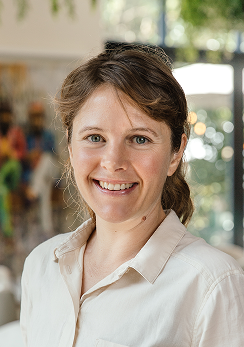
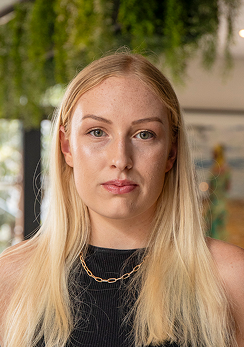
    Jessica Maitland-Stuart
    Brand Identity Designer
    Jessica is an accomplished strategic brand designer known for her typography and concept-led design approach. She used these finely-honed skills to develop Leopard’s branding and continues to design each of our personalised client itineraries.

    Jessica’s design philosophy focuses on collaborating with clients and building successful working relationships with small start-ups that share her drive to make an impact through the work she produces. That means her design doesn’t end with the artwork; extending into production to find ways of reducing both cost and environmental impact in symmetry with the design.

    Jessica is an avid runner, winning multiple marathons and ultras, a wife and mother of two, and she holds a BA degree in Brand Communication. She was recognised by the International Society of Typographic Designers and founded her own studio in 2007. Her company, Garage East (inspired by the ‘garagistes’ of France), is driven by the pursuit of meticulous craftsmanship.
    Hailey-Rose Kirsten
    Social Media
    Hailey-Rose lives in Cape Town and loves the city she grew up in. When she’s not working, she loves trying restaurants in beautiful locations (she has a ‘no eating in a shopping mall’ policy – if she can help it). She loves walking in nature and swimming in the ocean. (You may even find her occasionally taking a dip in the middle of winter).

    Hailey-Rose helps Leopard execute its social media strategy. She gathers relevant images and video content and publishes Leopard’s posts along with catchy audio. She keeps on top of Instagram trends and works with Elise to bring Leopard’s social media to life, keeping it in alignment with the Leopard brand.
    Elise Kirsten
    Digital Strategist
    Elise is passionate about travel and storytelling, like the rest of the Leopard team. She was the former online editor of Getaway magazine, South Africa’s oldest travel publication, and since 2020 has worked as a freelance travel journalist, helping brands and organisations in the travel sector to communicate with clarity and purpose.

    At Leopard, Elise helps to shape the company’s digital strategy and brings her writing expertise to life by alternating with Diana to pen newsletters, social content and website features.

    Married to her straight‑out‑of‑high‑school sweetheart and a proud mother of two adult daughters, Elise loves wide open spaces. When she’s not behind her desk, you’ll find her travelling, hiking, mountain biking or exploring the ocean — always chasing the next remarkable story.
    Caitlin Sidebottom
    Journey Support Specialist
    Growing up in Johannesburg, fondly known as the “City of Gold”, Caitlin was privileged to explore diverse destinations across South Africa, from game reserves to the warm shores of KwaZulu-Natal. She also treasures memories of visiting family in Vumba, Zimbabwe, where she loved being immersed in nature and the sense of freedom it brought. “I was awestruck when I visited both Victoria Falls and the Great Zimbabwe Ruins,” she recalls.

    Married with two small children, Caitlin enjoys spending time in nature, with friends, running, swimming and scuba diving. She describes her career as “meandering and colourful”. With a background in psychology and social development, she has worked as both a researcher and a counsellor. While moving into tourism seemed like a big shift, she soon discovered a clear continuity. "Travel can help people encounter life-giving experiences that reveal what it means to truly thrive and have the potential to influence how you live after returning home," says Caitlin.

    At Leopard, Caitlin supports the sales team to ensure every client enjoys a seamless experience. She also supports travellers while on the road, helps refine systems and processes, plans events, works closely with Leopard’s suppliers and conducts site inspections. Caitlin is passionate about tailoring each experience to fit you perfectly, so you can focus on the stories and memories you’ll take home.
    Pilar Peña
    Travel Designer | Spanish
    Pilar grew up in Marbella, in the south of Spain, known, much like Africa, for its sunshine. She moved to Johannesburg in 2013, and after more than a decade of living in Africa, she says that she feels her heart is half South African.

    When she arrived in South Africa, Pilar worked as a journalist and covered many big news stories for a newspaper and radio station in Spain. She considers it an amazing period of her life in Africa, but she wanted to embrace something different.

    Between working and being dedicated to raising her family, she travelled through southern Africa. During this time, her love for Africa, its sunsets, people, culture and landscapes continued to grow. Pilar wanted to share ‘the preciousness of this country and continent with everyone’. Now, as part of Leopard, she can do that.

    As a Spanish speaker, she works with the Spanish and Latin American markets and feels she is a true ambassador for South Africa. At Leopard, she works with clients to create a bespoke, tailor-made itinerary, where each day in Africa forms part of a perfectly dreamy trip. Pilar says that everyone should get to experience the magic of Africa.
    Helen du Toit
    Finance Manager
    Until the age of three, Helen lived in a little stone cottage in the Kyle Game Reserve, in Zimbabwe until she and her family relocated to the Kariba Dam on the great Zambezi River. Here, Helen’s father managed a Fisheries Research Institute and she grew up immersed in a culture of tourism. She also spent many Sunday afternoons in the bush observing wildlife with her family.

    Helen moved to South Africa in the early ’80s and after leaving school, she entered the travel industry. She travelled to many countries for business research and later became a specialist in travel to South America, which she visited numerous times.

    Her husband’s work required the family to settle in the little town of Mtunzini, a beautiful spot on the north coast of KwaZulu-Natal, where she took a job in the finance department at the local school. This began a chapter in Helen’s life that prepared her for corporate finance. Later, Helen worked as an imports and exports administrator and then as treasurer for a large multinational company in Johannesburg while undertaking post-graduate studies in Corporate Governance and Administration.

    When she and her family moved back to Durban, Helen worked as a bursar of a large private school. She was delighted to be living near the ocean again and couldn’t resist getting her open-water diving certificate, as her son was a scuba diving instructor. Helen’s love of adventure and creation has been a constant theme throughout her life.

    She was delighted to return to the travel industry and joined Leopard in September 2022 as a finance manager.
    Daphnée Filliette
    Senior Travel Designer | French and English
    Daphnée was born in Lille, in the Hauts-de-France region of France. A passionate traveller, she has lived and worked in several countries around the world.

    She first worked in the United States, where she has family, then moved to England to complete a Master’s in International Marketing, and later to Oceania, where she tried “WWOOFing” — working on a farm in exchange for room and board. Along the way, she met a great love in Paris, who would later become her husband, and this brought her back to France to find work and start a family.

    Daphnée began her career in fashion marketing and, in 2012, created her own fashion brand, managing all aspects of building a business.

    In 2016, Daphnée and her family had the wonderful opportunity to live in South Africa. “The question didn’t even arise — let’s go, that was obvious!” she recalls. Since then, they have welcomed three children and are enjoying life in Johannesburg.

    Daphnée has worked in the tourism industry for 10 years, specialising in Africa. Her favourite countries include Kenya and Namibia, though she also fell in love with Madagascar and Botswana. Her next adventure will be to Zambia.
    Diana Granoux
    Founder | Senior Travel Designer
    Diana was born in Zimbabwe and started her life on the banks of the great Lake Kariba. She moved to South Africa when she was a toddler and grew up in Kwa-Zulu Natal. Diana has vivid memories of long winter holidays spent camping in Zimbabwe, Namibia, Botswana and South Africa with her family. Her parents loved the bush and her father started his own tour operating company in 1992. He was an early pioneering specialist in bird watching safaris in South Africa.

    As she grew up, Diana became aware of the big, wide world outside of the African countries she knew so well, and she took her first solo overseas trip at age 14 to London to visit her father’s family. From that moment she became fascinated with experiencing the world beyond what she knew. Diana has since travelled extensively through Africa, Europe, America and Asia.

    Diana is married to a Frenchman and has two young kids, who are simultaneously developing a love for biltong & braai’s, and baguettes & brie. After 16 years gaining valuable experience working for big corporates in South Africa, Diana decided to follow her passion for travel and start Leopard. Diana has had the privilege of planning holidays for American celebrities, European royalty and high-net-worth individuals as well as regular folks who want to do a trip of a lifetime to Africa.

    She wants to create, with Leopard, a company that gives customers something unique: a curated experience of Africa, made especially for them. She says, “From the moment they arrive in Africa, to the moment they depart, I want them to have a seamless experience. I want them to enjoy the best the continent has to offer, leaving with memories that last a lifetime.”