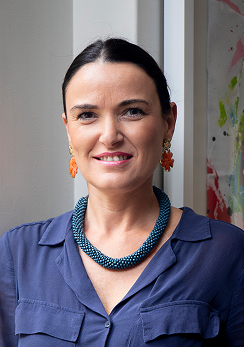
In Botswana, the Okavango Delta’s channels wind through reeds and floodplains where elephants swim between islands and hippos patrol hidden lagoons. Diana Granoux describes visiting the delta as “one of my favourite safari experiences ever.” She says Namibia, meanwhile, contains “some of the most ethereal landscapes I have ever seen.” Both rank among Africa’s greatest safari destinations, but they are strikingly different: Etosha, in northwestern Namibia, is shaped by salt and scarcity; the Okavango, in northwestern Botswana, by water and abundance.
Wildlife
The Okavango Delta is one of the world’s rare inland deltas, where rivers vanish into the Kalahari instead of the sea. The result is a labyrinth of papyrus-lined channels, palm-fringed islands and seasonal floodplains that support one of Africa’s richest ecosystems. “There’s always good food in the Okavango. There’s an abundance of wildlife and the predators that follow them,” says Simon Byron, owner of Beagle Expeditions, who run tented safari camps in the Delta.
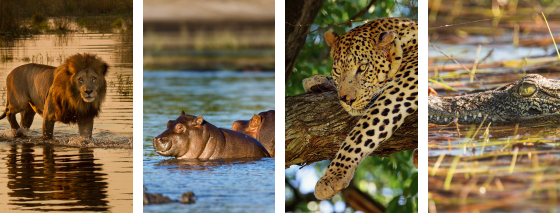
The abundance becomes obvious within minutes of entering the Delta. Herds of buffalo move through open floodplains, red lechwe bound across shallow water and elephants seem to materialise around every bend in the channel. Lions and African wild dogs also thrive in this productive ecosystem.
There are no rhino in the Okavango and if you want to see rhino, Etosha is the far more reliable choice. The park is one of Africa’s most important strongholds for the endangered black rhino, and an exciting experience is watching one emerge from the darkness at Okaukuejo’s floodlit waterhole.
Etosha’s drier environment supports a different cast of wildlife. At its heart lies the immense Etosha Pan, a shimmering white salt pan so vast it is visible from space. Beyond it stretches an arid landscape of open plains, thornveld and mopane woodland, where permanent waterholes become lifelines during the dry season.
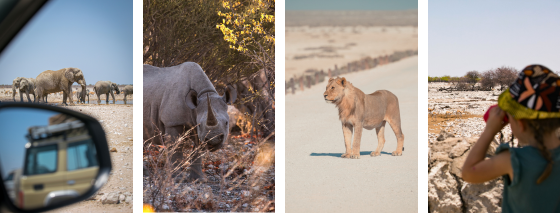
Etosha is too arid for buffalo, meaning you won’t tick off all of the Big Five, but desert-adapted lions, elephants, gemsbok, springbok, giraffe, zebra and blue wildebeest have also evolved to thrive in this harsh landscape. As wildlife converges at precious waterholes to drink, these natural gathering places offer some of Africa’s most reliable game viewing.
What you could experience on an Etosha safari
An Etosha safari begins at dawn, when the gates open and the bush is still cool. Lions and leopards may be returning from a night’s hunt, while giraffes, springbok and zebra emerge into the soft morning light. As the day unfolds, your guide follows a network of gravel roads between Etosha’s famous waterholes, where elephants gather in dusty herds and antelope keep a watchful eye for predators.
During the hottest hours, you’ll return to camp to relax beside the pool or watch wildlife from a shaded viewing deck. As temperatures ease, the bush comes alive once more and you can head out on a late afternoon drive.
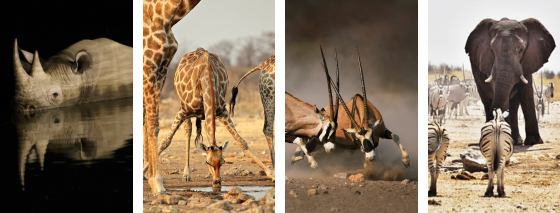
Herds drift back to drink, golden light washes across the salt pan, and the day’s final sightings unfold before you return to camp. After dinner, one last visit to the floodlit waterhole often provides a fitting finale, where elephants, lions and, if you’re fortunate, the endangered black rhino emerge silently from the darkness to drink.
What you could experience on an Okavango safari
A safari in the Okavango Delta may begin with coffee beside the campfire before setting off on foot, discovering fresh tracks in the sand and learning to read the stories written overnight. Or, you may drift through lily-covered channels in a traditional mokoro while a malachite kingfisher flashes electric blue across the water and the only sounds are the call of a fish eagle and the gentle splash of a poler’s paddle.
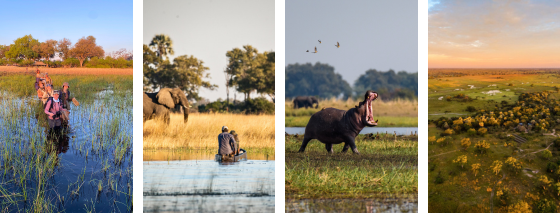
Game drives might reveal lions, wild dogs and vast herds of buffalo, while boat excursions offer a different perspective as elephants wade between islands and red lechwe bound through the floodplains. Between adventures, there is time to linger over a picnic beneath a shady tree, take in sweeping views from a helicopter, or simply absorb the stillness from camp as hippos grunt in nearby lagoons. The rhythm of each day is dictated by the wilderness rather than a timetable, in an area known for its exceptional guides.
Birds and photography
If you love birdwatching, both destinations have lots to offer.
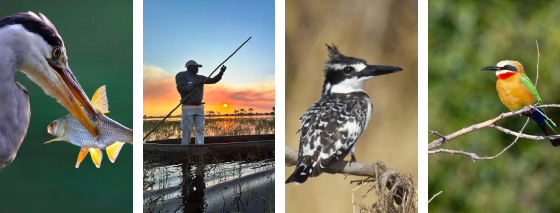
The Okavango’s wetlands attract more than 400 bird species, from African fish eagles and saddle-billed storks to the elusive Pel’s fishing owl. Reflections on still water create endless photographic opportunities, particularly of water birds.
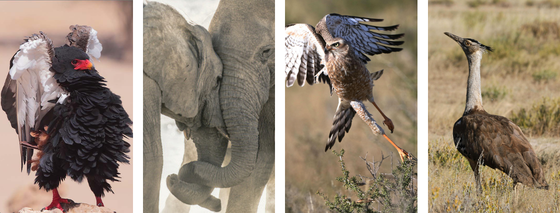
Etosha is great if you want to photograph raptors. You may witness a pair of bateleurs in an aerial skirmish, their crimson faces and talons flashing against the pale earth and their jet black wings catching the light.
Martial eagles, pale chanting goshawks, flamingos and kori bustards are also regular sightings. Here, the openness of the landscape gives you a front-row seat to the birds’ (and other creatures’) antics.
Which safari suits you?
Choose the Okavango Delta if you like luxury camps hidden among waterways and varied activities, like mokoro excursions, boating, horseback safaris or aerial views of the delta from a small plane or helicopter.
Choose Etosha if you love photography, appreciate dramatic desert landscapes and enjoy sitting and watching wildlife behaviour around waterholes.
Of course, if time allows, you don’t have to choose. Many Leopard clients like to combine Botswana and Namibia into a single itinerary, allowing you to experience two completely different aspects of Africa.
There are direct flights between Windhoek (Namibia) and Maun (Botswana) that only take an hour, making it easy to hop between a watery paradise and a soul-stirring desert.
Happy travelling,
The Leopard Team
Sign up for more newsletters like this here: https://mailchi.mp/2e4afa50d15f/leopard
We are totally independent and not affiliated to any group of lodges, so you know that you’re getting the best itinerary and choice of accommodation on offer.
Crafting your ideal holiday can be a time consuming exercise, especially if you don’t know the region well, or you’re travelling in a group (like a multi-generation family holiday, or for a special celebration). We take your requirements and then distill and simplify all the travel info into a perfect itinerary for you. You’re welcome to be involved in the planning process as much, or as little, as you like.
Leopard is a small “human-sized” business offering personal touches. We want you to feel like you’re dealing with a real person who gives you the attention you deserve.
We specialise in curating itineraries that apply sustainable travel principles. One of our core company values is to support the conservation of biodiversity through travel. We recommend longer stays in each destination, supporting local small businesses and visiting off the beaten track attractions.
Our meticulous planning ensures our clients have a completely seamless experience, but in those instances where something goes wrong, we are available 24/7 to solve any problems.
We are true Africa experts. “My team and I visit almost every hotel and update our ‘little black books’ with hidden gems, so I can recommend the perfect stay for every client,” says Diana Granoux, Leopard’s founder and director.
We curate each journey for you. Every itinerary is handcrafted to ensure that it matches perfectly with your wishes. We tailor each itinerary so every detail feels perfect. From breathtaking beaches to adventurous safaris, spectacular views, hotels and knowledgeable guides.