We’re excited to have added the subtropical island of St Helena to Leopard’s offerings. It’s utterly unique and possibly the world’s most remote inhabited island. Leopard team member Elise Kirsten visited the island recently and shares about it in this newsletter:
“St Helena sits in the South Atlantic about halfway between Africa and South America. For centuries, this subtropical, volcanic island was known mainly as the remote prison where Napoleon Bonaparte was exiled and spent the last years of his life. Today, it’s one of the world’s most remote inhabited islands and one of the least-visited destinations on earth.
Which, naturally, is exactly why some travellers are drawn to it.
As our small plane descended towards the island, sheer cliffs rose abruptly from the ocean like a lost kingdom emerging from the sea. The airport is situated in a barren, rocky area on the outer edge of the island, but as we drove across St Helena, the first thing that surprised me was how green parts of the island were. From the air, it looks rugged and volcanic, but inland the landscape softens into rolling hills, flax-covered slopes and misty forests threaded together by impossibly steep roads.
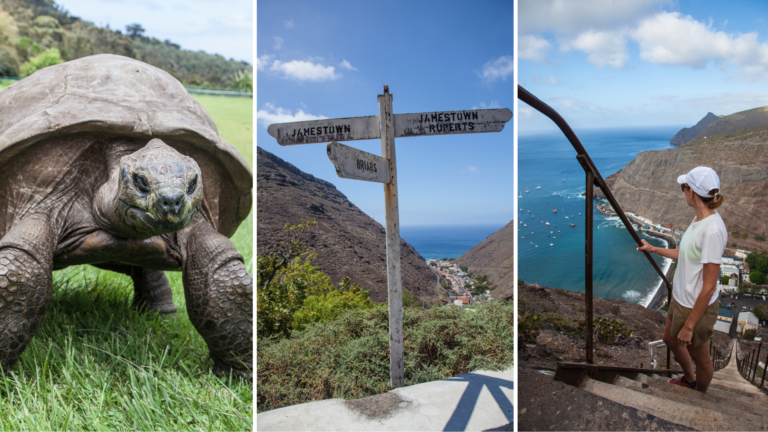
I stayed in Jamestown, the island’s tiny capital, which lines a narrow valley between towering cliffs that runs towards the harbour and ocean. Its Georgian buildings, churches and colourful homes feel tied to another era. There are no traffic lights, very little traffic and almost no sense of hurry.
Rising above the town, you’ll find Jacob’s Ladder, a steep staircase climbing 699 steps up the side of the cliff. Built in the 1800s as part of a railway system transporting supplies from the harbour, it now serves mostly as a workout for visitors brave enough to tackle it to enjoy the views from the top. After I’d made my way up with a friend, I watched as fairy terns glided in the thermals just off the cliff, far above the rows of boats and yachts bobbing below in the Atlantic Ocean. (You can drive to the top if you prefer, but climbing the stairs is almost a rite of passage for visitors to the island).
To find out more about some of the island’s history, I visited Longwood House, Napoleon’s home on the island. The creaking wooden floors and faded furniture offered a glimpse into his existence here, as did the garden, where Napoleon spent a lot of his time. There’s even a fishpond in the shape of his famous emperor’s hat. While I enjoyed the tour and stood in the room where the emperor drew his last breath, what drew me to this island was my intrigue about diving and snorkelling in its clear, warm subtropical waters.
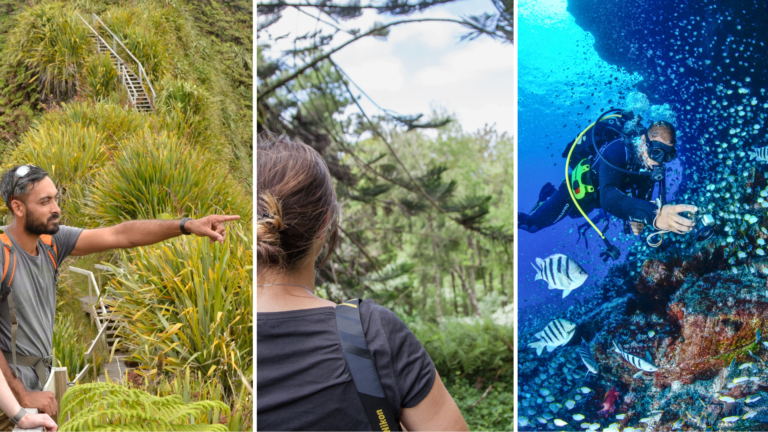
Whale sharks migrate through the island’s waters between December and March, making St Helena one of the best places in the world to swim alongside these gentle giants. I visited in early December and although one or two bone sharks (as they’re called here) had been spotted while I was on the island, on the couple of days that I went out on the ocean, I missed them.
I interviewed marine conservation projects manager at the St Helena National Trust, Kenickie Andrews for an article about the island’s ocean experiences, who says the island has intentionally created responsible, low-impact whale shark encounters that prioritise the animals’ well-being.“It’s not just about protecting bone sharks locally,” says Andrews, “It’s about creating a global benchmark for sustainable and respectful marine tourism.” Unlike other whale shark hotspots that can feel crowded and commercialised, encounters here remain wonderfully intimate.
According to locals, sliding into the warm Atlantic to see a whale shark gliding by is an incredible encounter. They can grow up to 12 metres long, yet move with astonishing calmness. The visibility is incredibly good here and if you do time it right, you’ll enjoy the surreal privilege of sharing space with one of the largest fish on Earth.
Even outside whale shark season, the diving around the island is exceptional. The volcanic underwater topography creates caves, lava formations and dramatic drop-offs where tropical and temperate marine species overlap. While snorkelling and diving around the island, I encountered schools of St Helena’s endemic butterfly fish, glass-eyed snapper, and a couple of trumpet fish. On our return from the dive site, we had spinner dolphins weaving through the bow wave of our boat. I loved being in and on the ocean and our dive guide Craig Yon, co-owner of Dive St Helena, was very experienced in these waters.
Back on land, there are 21 hikes, known as the Post Box Walks, named after the post boxes at the end of each trail where you can stamp a logbook to record your hike. I enjoyed doing two of the hikes, namely the Blue Point hike, which is quite easy and offers beautiful views from the cliffside halfway mark over the ocean and the Lot’s Wife’s Pools hike, where the remoteness of the island is palpable and I felt like a National Geographic explorer.
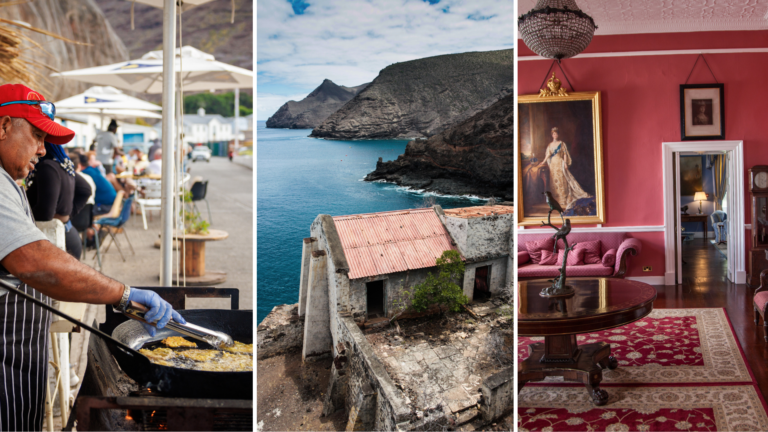
Another highlight of my trip was a visit to Wranghams Coffee Estate. Here, the owner, Neil Fantom, grows Arabica coffee beans, which are hand-picked, dried and roasted to produce a very fine, sought-after coffee. After a tour, Neil served us some of his brew, which we enjoyed with cake in his home, overlooking the emerald green valley below.
Besides all the natural wonders of St Helena and the great coffee, one of the best parts of my visit was meeting local Saint Helenians known as ‘Saints.’ They are kind and unhurried people. When we stopped to admire his plants on his balcony, an elderly gentleman invited us into his home to meet his wife and see his plant collection in his courtyard. People also still greet one another in the street and wave at passing cars, which I found endearing.”
Getting to the island used to require a five-day voyage by ship, until the airport opened in 2016. Now, it’s a five to six-hour flight via Johannesburg or Cape Town with SA Airlink.
St Helena makes a great add-on to a visit to South Africa. Because of its isolation, we recommend staying on the island for at least a week to truly soak in the volcanic scenery and the hospitality of the local Saints.
Happy travelling,
The Leopard Team
P.S. Let us know if you have any questions about travelling to this remote and beautiful island.
We are totally independent and not affiliated to any group of lodges, so you know that you’re getting the best itinerary and choice of accommodation on offer.
Crafting your ideal holiday can be a time consuming exercise, especially if you don’t know the region well, or you’re travelling in a group (like a multi-generation family holiday, or for a special celebration). We take your requirements and then distill and simplify all the travel info into a perfect itinerary for you. You’re welcome to be involved in the planning process as much, or as little, as you like.
Leopard is a small “human-sized” business offering personal touches. We want you to feel like you’re dealing with a real person who gives you the attention you deserve.
We specialise in curating itineraries that apply sustainable travel principles. One of our core company values is to support the conservation of biodiversity through travel. We recommend longer stays in each destination, supporting local small businesses and visiting off the beaten track attractions.
Our meticulous planning ensures our clients have a completely seamless experience, but in those instances where something goes wrong, we are available 24/7 to solve any problems.
We are true Africa experts. “My team and I visit almost every hotel and update our ‘little black books’ with hidden gems, so I can recommend the perfect stay for every client,” says Diana Granoux, Leopard’s founder and director.
We curate each journey for you. Every itinerary is handcrafted to ensure that it matches perfectly with your wishes. We tailor each itinerary so every detail feels perfect. From breathtaking beaches to adventurous safaris, spectacular views, hotels and knowledgeable guides.